




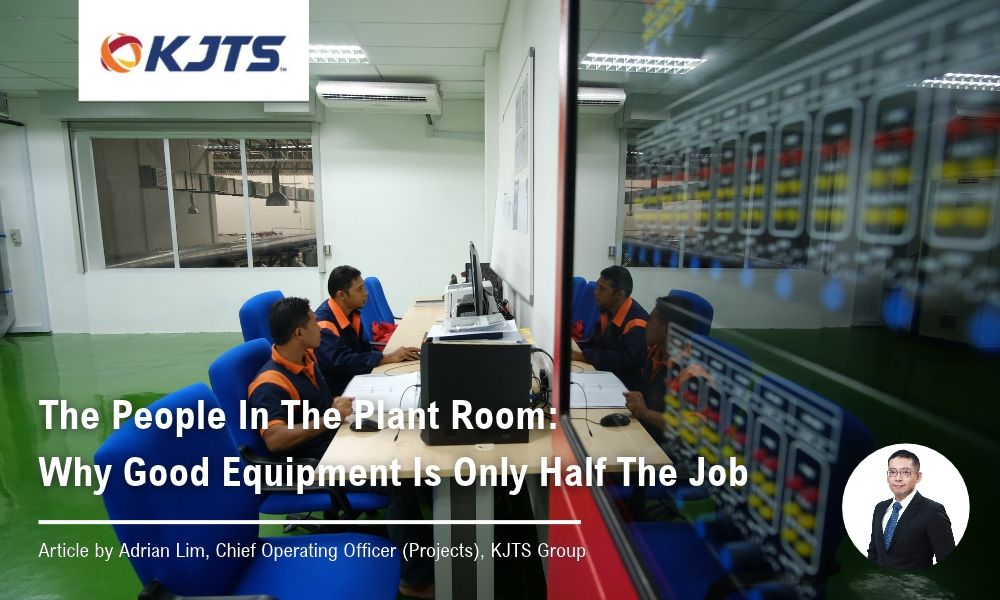
KJTS Group is sharing one more LinkedIn article in our Thought Leadership series. In this latest article, our COO Projects, Adrian Lim, examines why the people operating a cooling system are just as important as the equipment in maintaining its long-term performance.
The article explains how small operational decisions can affect energy efficiency over time. Adrian highlights why a cooling system cannot simply be left to run on its own after handover, and how continuous monitoring can help identify performance changes before they become more significant issues.
The article covers three key considerations for maintaining cooling plant performance. These include aligning boardroom energy targets with day-to-day operations, making performance data accessible to facilities teams and drawing on the experience of technicians who understand the building. It also explains how monitoring and operational knowledge can work together to identify and address inefficiencies.
Adrian further emphasises the importance of involving experienced facilities teams in energy management and major upgrade projects. By combining engineering expertise, the Central Command Centre and the knowledge of plant operators, KJTS can support performance beyond project handover.
Through these practical insights, Adrian highlights why building owners should consider the people responsible for operating a plant alongside the equipment when evaluating long-term energy contracts and cooling system upgrades.
The article was first published on the KJTS Group LinkedIn page on 6 November 2026.
When a building owner signs off on a new cooling system, it is natural to think the hard part is over. The chillers are new, the controls are the latest available and the efficiency figures on the proposal look excellent. After that, it is easy to assume the system more or less runs itself. In my experience, that is where a lot of good projects start to slip, and it rarely has anything to do with the equipment.
THE “SET AND FORGET” MYTH
Picture a hot Tuesday afternoon in a building with no continuous monitoring. A tenant on the eighth floor calls to say their office is too warm, so the technician on duty, wanting to sort it out quickly, overrides a setting on the plant to push more cooling through. The complaint stops and everyone moves on, but the setting stays exactly where it was left. Because nothing breaks and nobody complains, it can go unnoticed for weeks, while the building stays comfortable and quietly uses more electricity than it needs to every single day.
That technician did nothing wrong, because he solved the problem in front of him, which is what he was trained to do. But it shows why no cooling system, however advanced, stays efficient on its own. Small decisions made on the ground, often for perfectly sensible reasons, add up over months and years, and a plant that was running beautifully at handover can drift back towards where it started unless someone notices, asks why and puts it right.
This is also why KJTS works the way it does. Under our design, build and operate model, we do not hand over a new plant and walk away; we stay responsible for running it, often for 10 or 20 years. Some of our contracts are also structured as energy-as-a-service, where the customer pays for the cooling delivered instead of buying the equipment outright, which means our own results depend on the plant staying efficient long after handover. The upgrade gets the plant to a good place, but it is the team running it that decides whether it stays there.
THE BOARDROOM AND THE PLANT ROOM ARE OFTEN TALKING PAST EACH OTHER
At the top of many companies, energy now comes up regularly in board meetings, along with carbon targets, sustainability reports and pressure from investors and customers. All of those matters, but down in the plant room the priorities look very different. The facilities team’s job is to keep the building cool, keep the equipment running and keep complaints to a minimum, and if a mall’s concourse gets warm on a Saturday afternoon, nobody calls the plant room to ask about the carbon target.
So, it should not surprise anyone when a target set in the boardroom has little effect on what happens on the ground. The team is not ignoring it; more often, nobody has shown them what it means for their day-to-day work, and nothing in how they are measured rewards them for it. If the only feedback a technician ever gets is a complaint when something goes wrong, then avoiding complaints naturally becomes the whole job.
What helps, I find, is making efficiency something the team can see and talk about. When the plant’s performance is reported regularly, in numbers the facilities team understands, it stops being an abstract goal from the head office and becomes part of how they judge their own work. On the plants we operate, the number we rely on most is a simple one: how much electricity the plant uses for each ton of cooling it produces, which our customers see in a report every month. It also gives management something far more useful than a yearly sustainability figure, which is an early warning when things start to slip.
WHAT AN EXPERIENCED TEAM ALREADY KNOWS
When new technology comes in, there is a tendency to treat the existing team as part of the old system being replaced, and I think that is a mistake. A technician who has looked after a plant for ten years knows things no monitoring system will tell you: which chiller struggles on the hottest afternoons, which pump starts to sound wrong before it fails, and how the building behaves during Hari Raya when half the tenants are on leave. That knowledge took years to build, and it is very easy to lose.
Good monitoring and controls do not replace that experience; they help people put it to better use. At KJTS, our Central Command Centre monitors the plants we operate around the clock. It can flag changes in performance, but it often takes someone who knows the building to explain why they are happening. The best results come when the people who know the plant work closely with those who know the new system, and when experienced hands are involved early enough to help shape the project, rather than simply being handed new procedures at the end.
One example of this was when our plant readings showed that chilled water was being supplied within the agreed parameters, yet one part of the building was still too warm. The operator knew that the area had recently been partitioned, leading the team to investigate air distribution and local controls.
In another instance, the operating schedule looked reasonable on paper, yet occupants were finding the building warm at opening time. Knowing how long the building took to cool down after a weekend shutdown helped us refine the start-up sequence.
WHAT I WOULD ASK BEFORE SIGNING
If you are considering a long-term energy contract, or any major upgrade, it is worth asking about the people as much as the equipment. Find out who will be running the plant day-to-day and how they will work with your own facilities team, how they will know when performance starts to slip and who is responsible for acting on it. It is also worth asking whether the person making a quick decision on a hot afternoon understands what that decision costs.
The equipment will always get most of the attention in a proposal, because it is easy to show on paper. Over 10 or 20 years, though, whether the savings hold up comes down to the decisions made in the plant room, one afternoon at a time. That is why we have built our business around operating plants and looking after the buildings they serve, not just designing and building them. With the right people in that room, people who care about how the plant performs, good equipment will keep paying for itself, but without them, even the best system will slowly lose its edge.